
The leopard is so strong and comfortable in trees that it often hauls its kills into the branches. By dragging the bodies of large animals aloft it hopes to keep them safe from scavengers such as hyenas. Leopards can also hunt from trees, where their spotted coats allow them to blend with the leaves until they spring with a deadly pounce. These nocturnal predators also stalk antelope, deer, and pigs by stealthy movements in the tall grass. When human settlements are present, leopards often attack dogs and, occasionally, people.
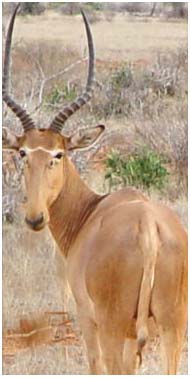
Description
Size:
Head and body length: 120-205 cm
Shoulder Height: 88-134 cm
Tail Length: 10-60 cm
Weight: 68-115 kg
A slender antelope with a sandy brown coat which is paler
below. The species has an elongated face with a slightly convex forehead. A
white line, or chevron, passes from one eye to the other across the forehead,
giving the HIROLA the appearance of
wearing spectacles. The long, thin tail is white, as are the ears, which are
tipped with black. The horns are well developed in both sexes; these are
lyre-shaped and conspicuously ringed for most of their length, and when fully
developed can reach lengths of over 70 cm.
ECOLOGY
Hirola are selective grazers. Their diet consists of short
grasses, supplemented occasionally with forbs. They follow the progress of
newly sprouting grasses on the savannah and grasslands, avoiding areas
containing long grass. Most feeding activity takes place at dawn and dusk.

No comments:
Post a Comment